Viserra: AI-Powered Stock Research & Screening
Time:
Sep 2025 (1 Week)
Role:
Solo Product Designer
Tools:
Lovable, Claude, Gemini, Supabase, Financial API
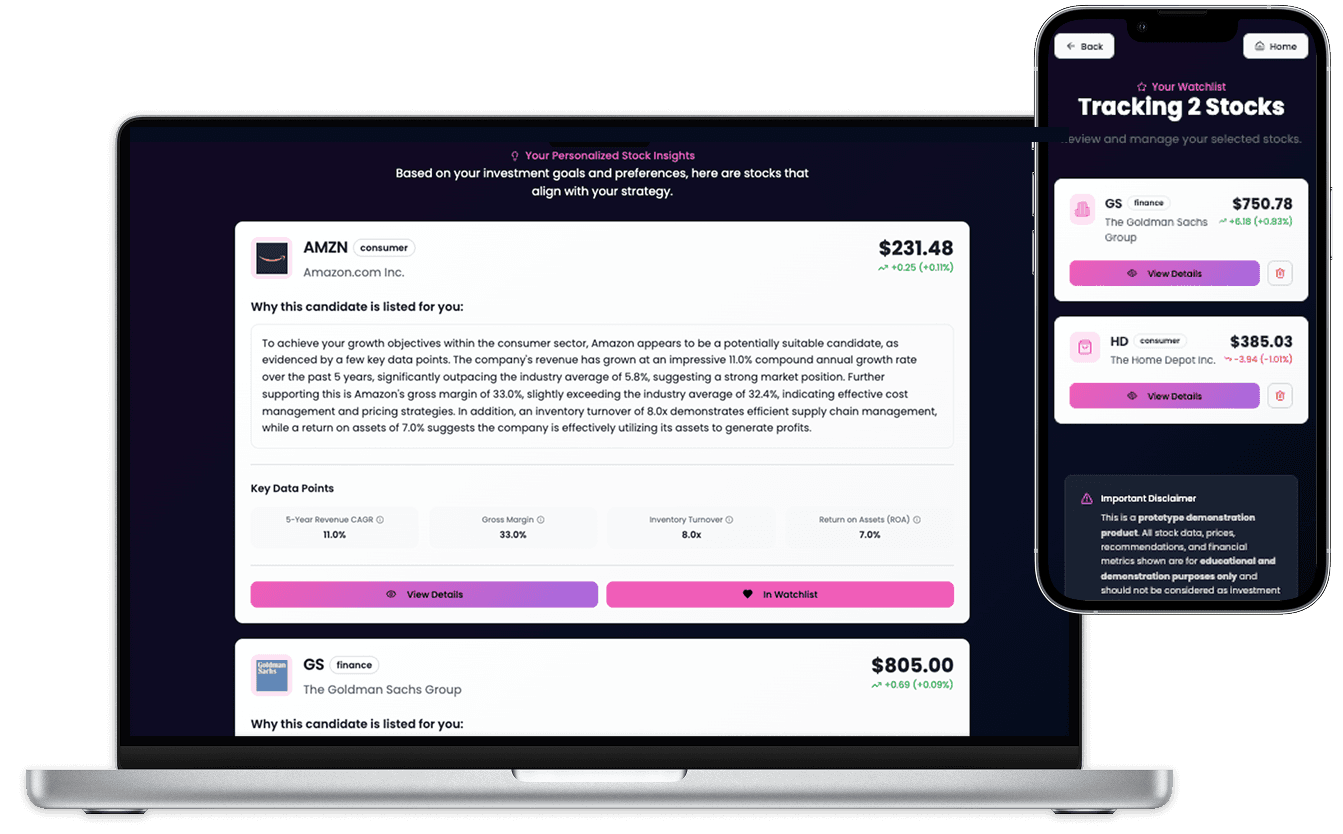
Viserra is an AI-driven research platform that simplifies stock analysis, reduces cognitive load, and supports informed decision-making.
Background
A Pain Point I Experienced as a Retail Investor
In the investment world, people often say “Do your own research.”
As someone new to investing, I gradually realized how fragmented and cognitively demanding that process can be.
Research meant switching between dashboards, financial statements, news sources, and screeners. However, even after hours of research, I remained uncertain about which stocks truly aligned with my goals and parameters.
This highlighted a structural gap: investment research tools offer abundant data, but do not help users translate that data into decisions.
User Pain Points:
Limited Alternatives
Human advisors are costly, while robo-advisors often lack transparency or personalization.
Time Intensive
Knowledge Gap
Complex financial metrics overwhelm beginners, making it unclear which signals truly matter.
Opportunity
How might we bridge the gap between abundant financial data and decision clarity for retail investors?
Solution
AI-Powered Stock Research System
Core Design Principles:
Reduce Cognitive Load
Users define their own criteria, and the system structures relevant financial data into digestible insights.
Clarify Financial Signals
Complex metrics are translated into plain-language explanations to reduce ambiguity.
Increase Transparency
Each surfaced stock includes a clear breakdown of how it aligns with user-defined preferences.
💡Product Consideration:
Because Viserra operates in an investment context, it should avoid direct recommendations. The system presents aligned stocks as research inputs, supporting informed decision-making without prescribing action.
To validate the concept beyond wireframes, I built a functional prototype using:
💻 Frontend
Interactive UI

🗄 Backend
Database & Hosting

📊 Financial Data
Stock Price, Company Info
Alpha Vantage/FMP API
🧠 AI + LLM
Personalized Analysis

Prototype
Questions about goals, risk comfort, industry preferences, and investing habits help identify which companies align with users’ expectations.
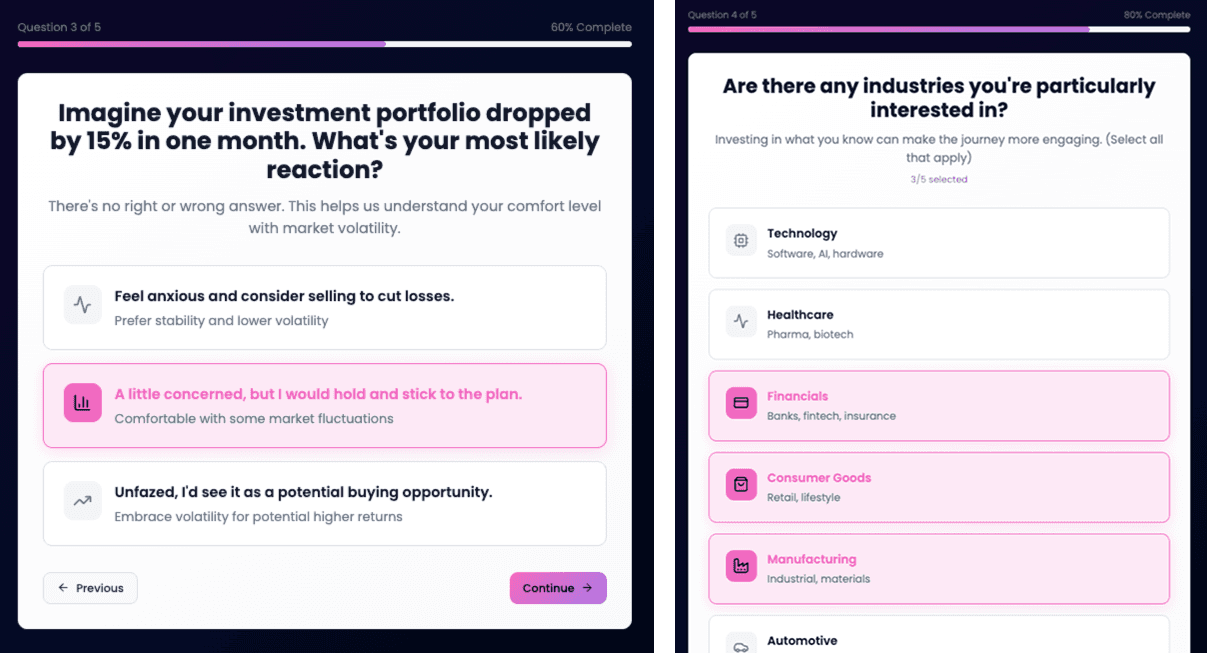
From a user-centric perspective, the system screens stock candidates, integrates API data, and leverages LLMs to generate a brief personalized analysis.
Key industry metrics are explained in plain language, helping users avoid complex financial jargon.
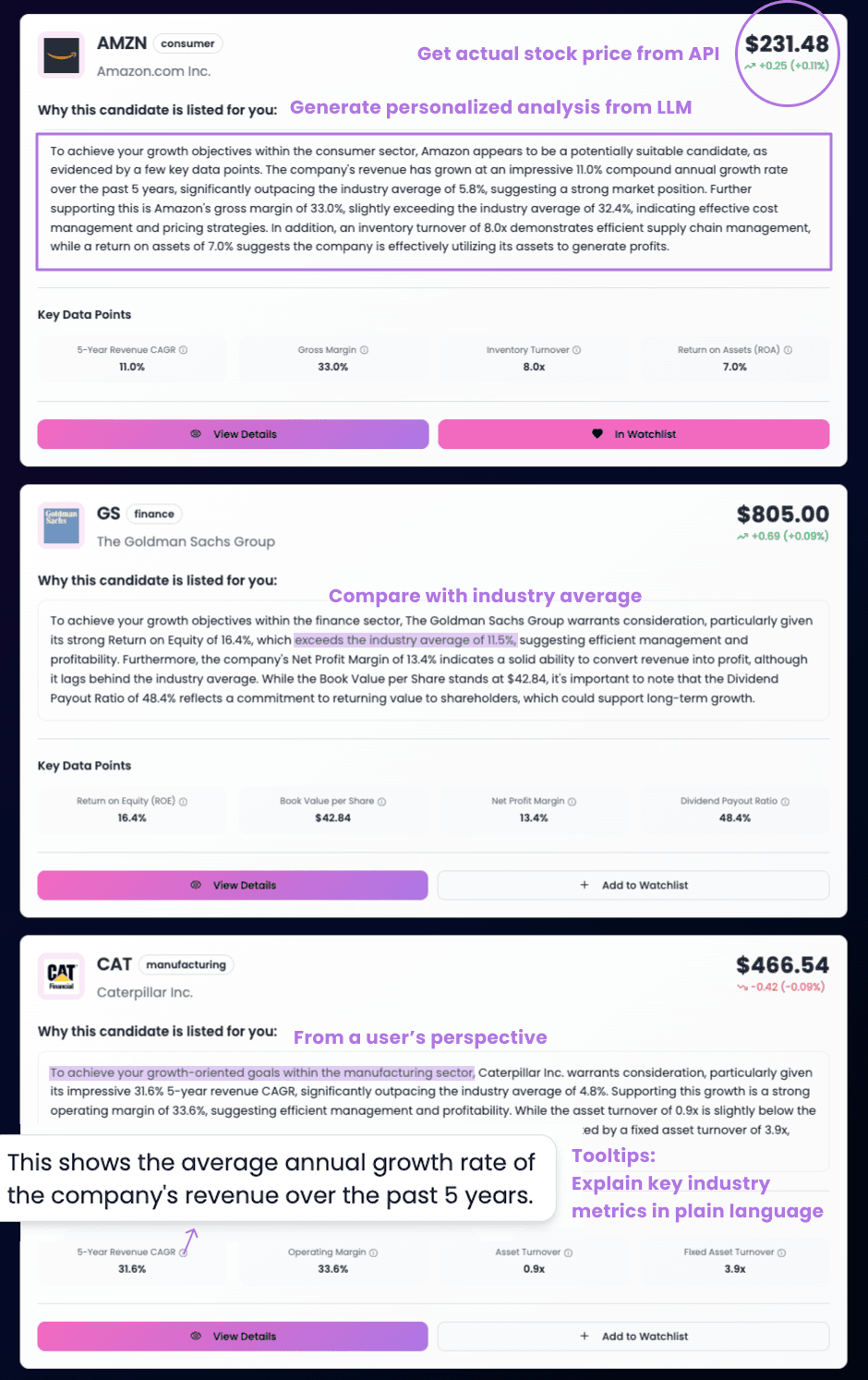
Users can click View Details to access a deeper layer of analysis, including extended explain of financial metrics, historical trends, and AI-generated insights.
The About the Company section provides background to help users understand company's business.
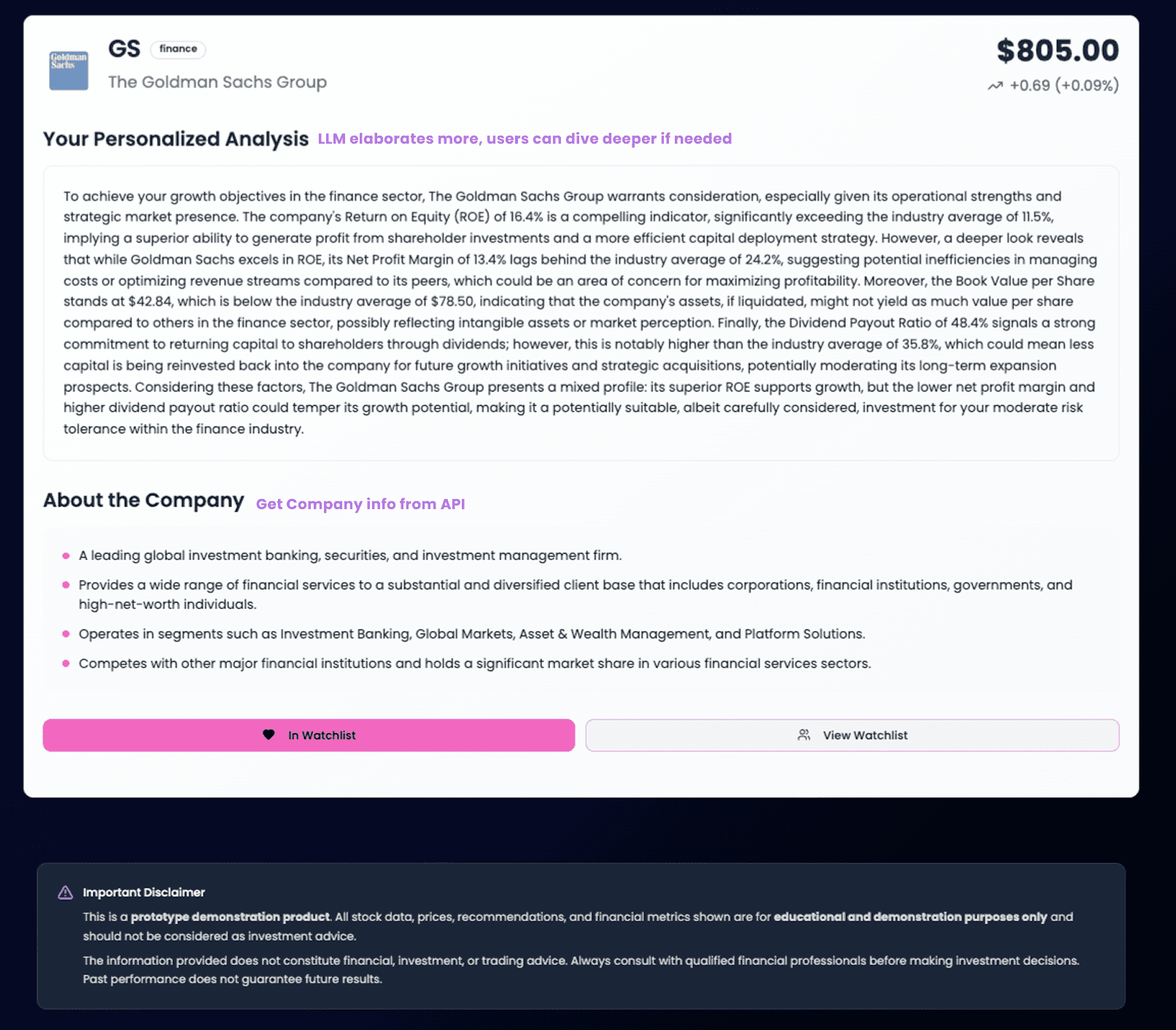
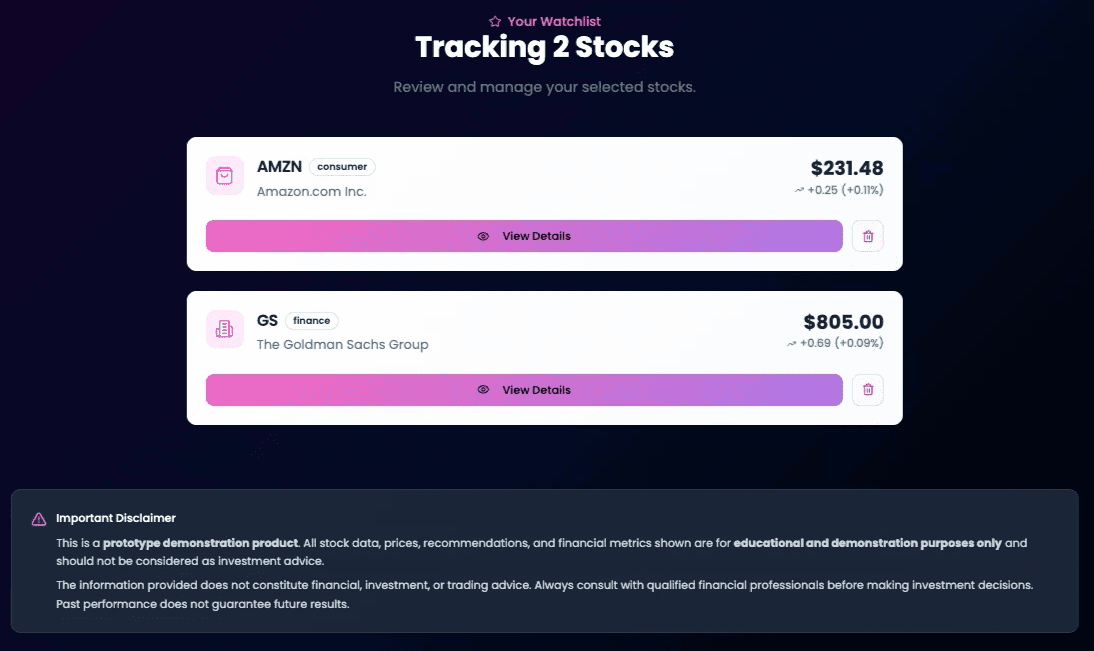
Users can save stocks they are interested in to their Watchlist, allowing them to revisit these candidates later with updated data.
Final Design
Visual Tone
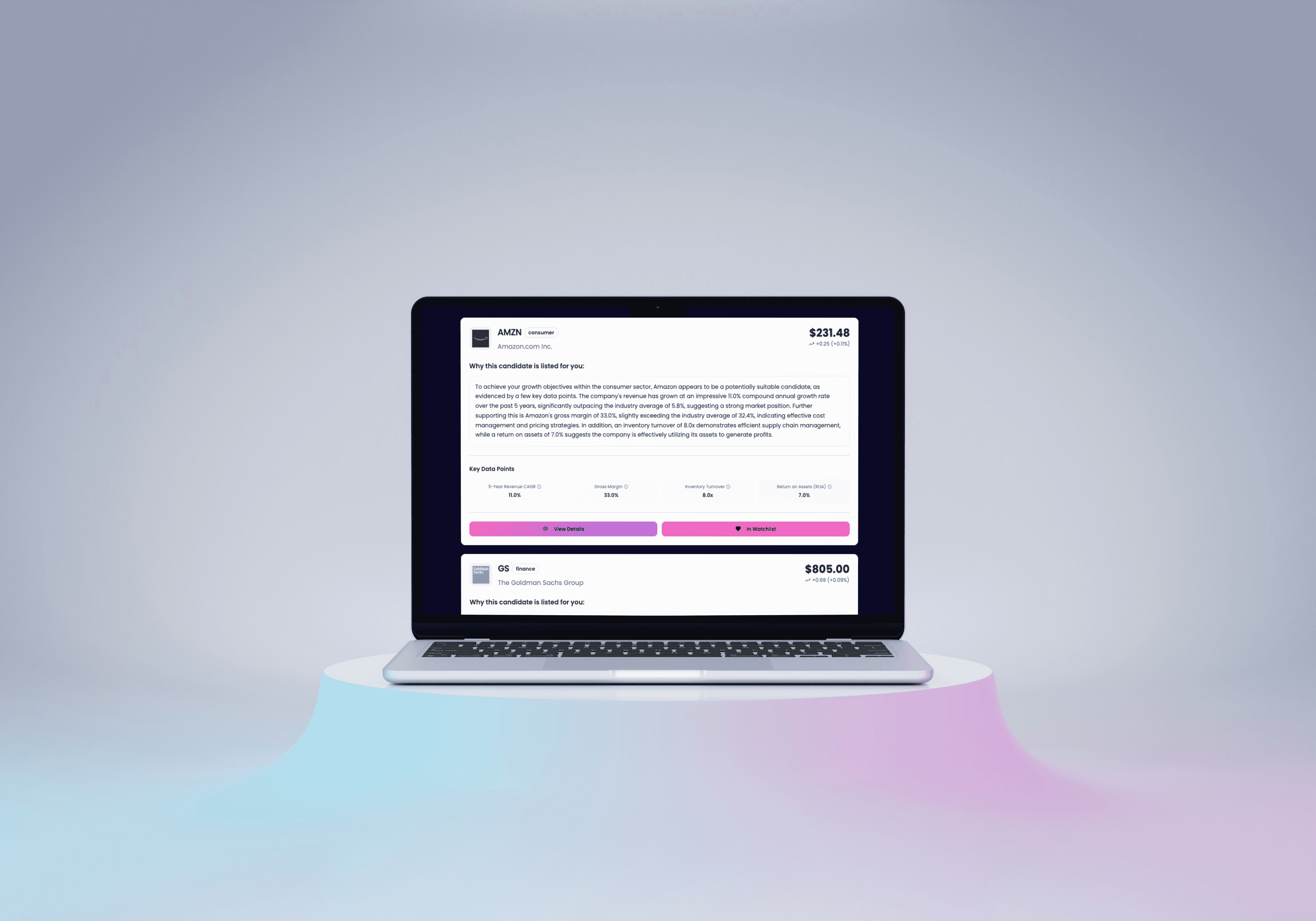
Most stock research platforms rely on dark themes and high-contrast trading visuals. I intentionally chose a softer purple and pink palette to create a calmer, more approachable experience. The goal was to make financial research feel accessible.
Reflection
What I Learned from AI Prototyping